
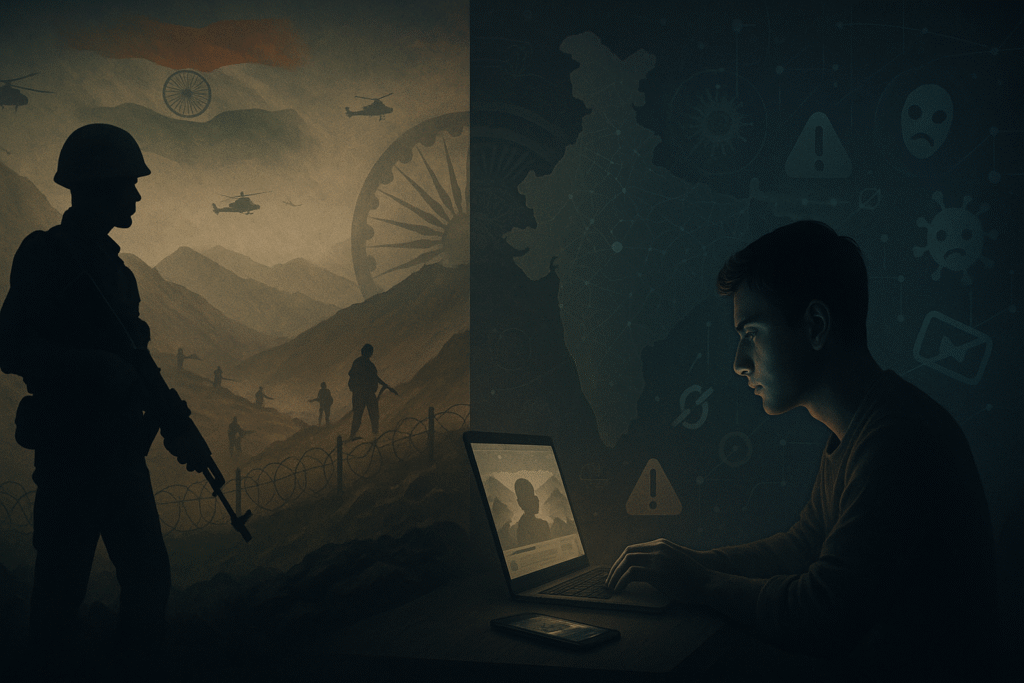
India is fighting a dual war. On one front, there’s the direct aggression from across the border. On the other, an equally dangerous front—the war of narratives, fought through misinformation and viral propaganda. The deluge of fabricated headlines, doctored videos, and fake news hasn’t subsided despite the short ceasefire. The goal of the disinformation campaign planned in Pakistan was to confuse, agitate, and split India. Since knowledge travels more quickly than bullets, the enemy exploited it as a weapon.
That’s why now, more than ever, we need vigilance—not just on the ground, but online too. As citizens, we must verify every video or news before forwarding, believing, or reacting to it. We fight back not just with firepower—but with facts. India’s greatest defence in this invisible war is its people—its journalists, influencers, fact-checkers, and informed citizens. The battle is no longer just for physical territory but for narrative control.
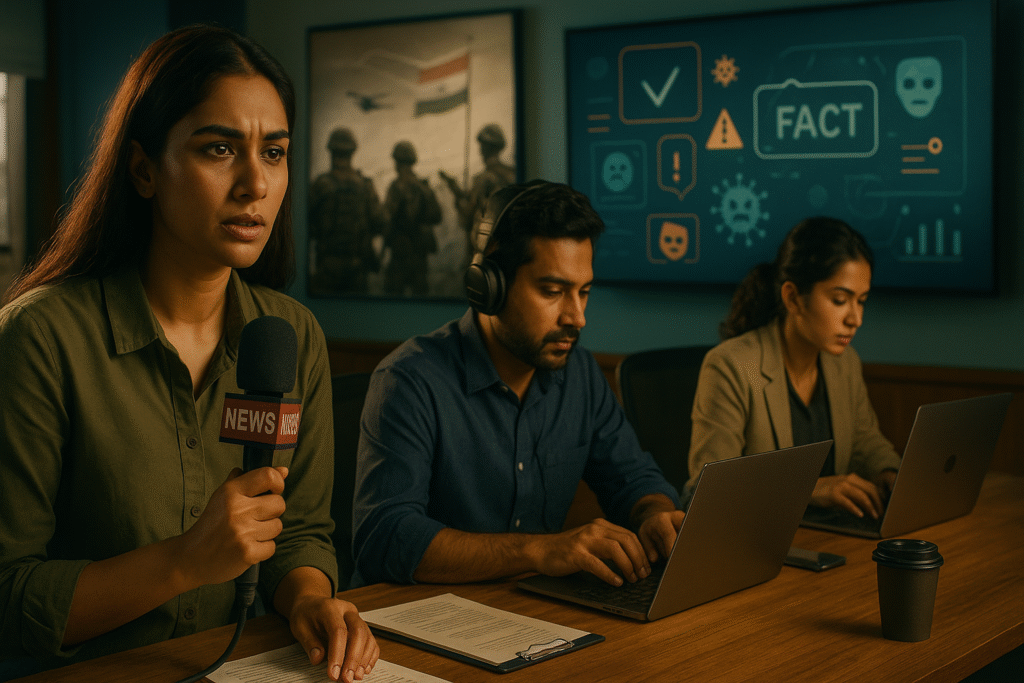
Strategies for a Digital Defense
- Empower credible journalism: Real reporting must be louder than propaganda. Independent media and defence correspondents need platforms and reach to counter fake narratives with facts on the ground.
- Improve fact-checking infrastructure: India still has a weak fact-checking infrastructure. Therefore, fact-checking platforms like lAlt News, PIB Fact Check, and others must get government support in identifying and debunking viral lies before they become true.
- Mobilize Indian influencers and digital creators: These voices shape perception for millions. A proactive, unified narrative from credible creators can drown out the noise of enemy-led misinformation.
- Create content that travels faster than lies: Facts are not enough—they need formatting. India must invest in short-form explainers, reels, carousels, and engaging storytelling that turns verified information into viral truth.
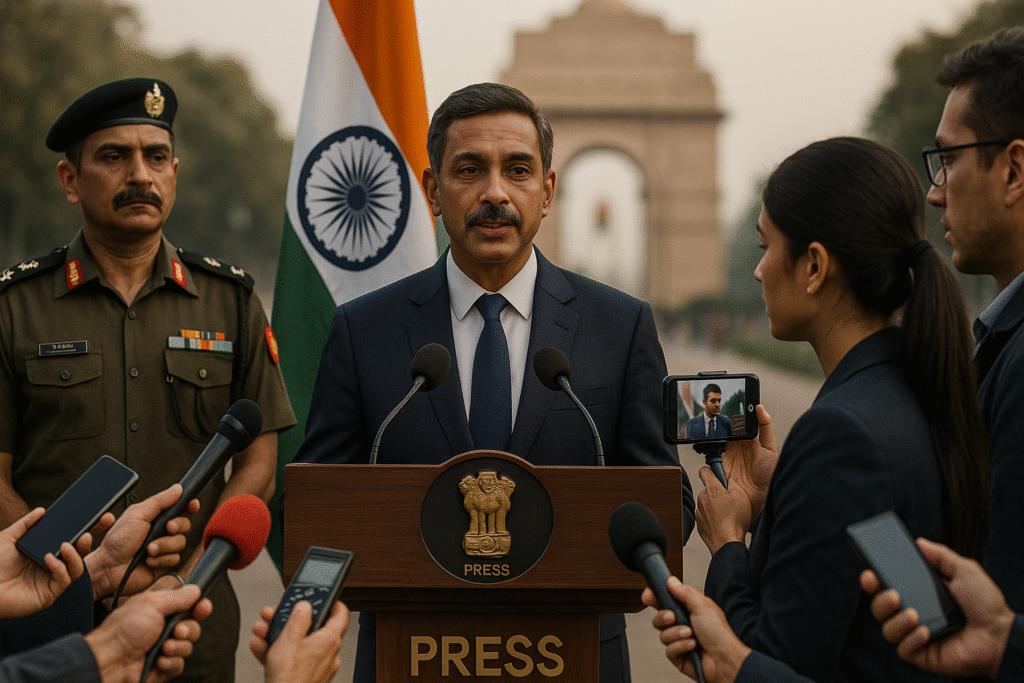
Why PR Matters in Information War
- PR creates the right messaging: India needs a unified, well-crafted narrative delivered across trusted platforms. This will make the right perception of a nation speaking with one voice—that voice gets heard globally.
- PR builds relationships with credible media: When fake news goes viral, it’s the top-tier journalists and outlets that people turn to for truth. Proactive PR ensures those relationships are in place before a crisis hits, not after.
- PR turns facts into formats: In a war of speed, long press releases won’t do. PR knows how to turn data into headlines, verified events into Instagram carousels, and military briefings into human stories that engage and inform.
- PR defends reputations at scale: From official spokespersons to defence experts and citizen voices, coordinated PR ensures India doesn’t just react—it leads the narrative.
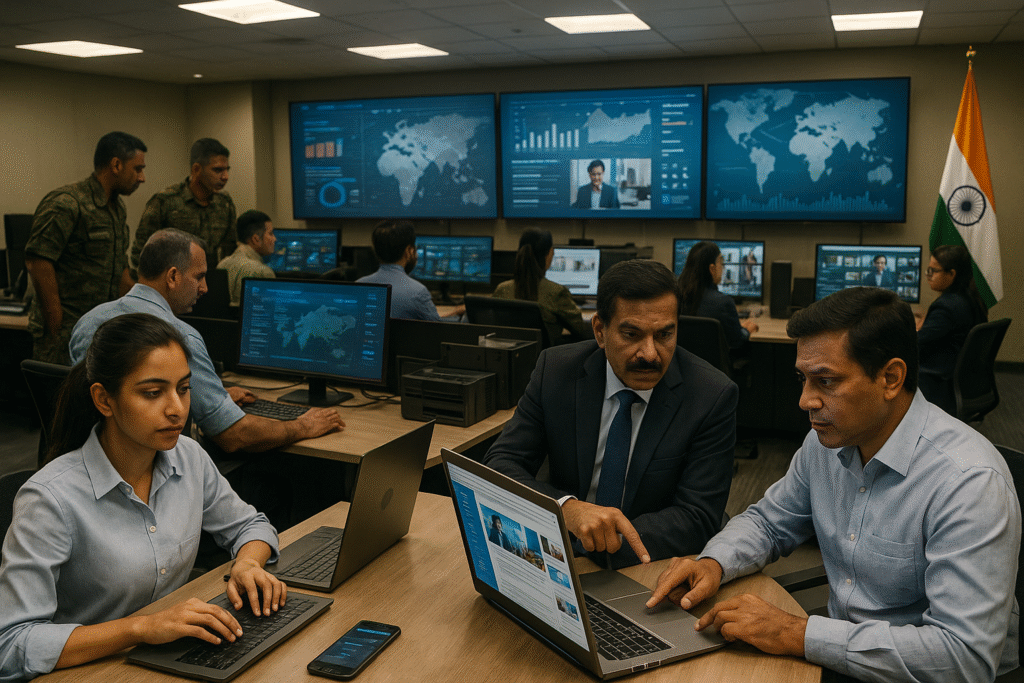
Building India’s PR-Led Information Defense
Like roads or radar systems, India must treat strategic communication as infrastructure to win the information war. This includes:
- Empowering PR agencies and crisis comms specialists to work alongside security and government bodies.
- Training public sector voices in digital narrative building.
- Creating real-time, multilingual content pipelines that counter propaganda with fact and empathy.
- Backing journalists and analysts with access, data, and protection—so trolls don’t drown out the truth.
In today’s interconnected society, we are all nation-wide public relations agents. Every share, forward, and post either boosts our country’s credibility or contributes to disinformation campaigns. In this age of muddled truths and quick spin cycles, we require more than just attentiveness; we require a voice. A voice influenced by values, facts, and strategy. That is what PR brings to the table—not hype, but honour. Not spin, but strength. In the fight against propaganda and perception, the side that owns the story wins, not just the one with the most powerful army.